Tips to Simplify Your Raw Feeding
Whether you’re new to raw feeding or just need a refresher on best practices, keep reading to see how you can safely, easily handle, prepare, serve, and store raw pet food.
Complete & Balanced Recipes
Freeze-Dried Raw Recipes
Freeze-dried raw food is shelf-stable and should be stored in a cool, dry place. Rehydrate food with Bone Broth, Goat Milk, or warm water for optimal nutrient absorption. Add 1 tablespoon of liquid for every Freeze-Dried Nugget served and a third of a cup of liquid per cup of Freeze-Dried Scoopable Pronto served.
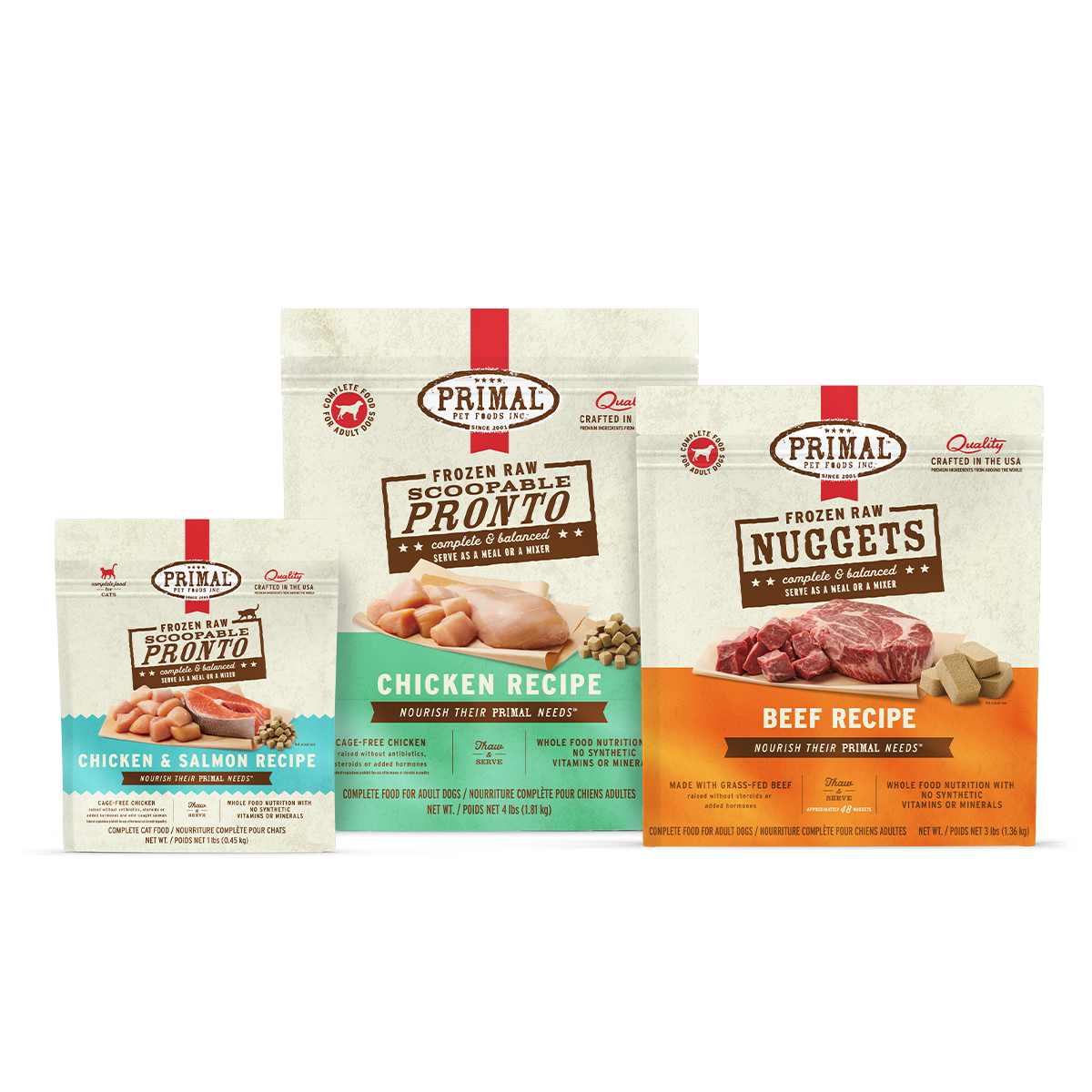
Frozen Raw Recipes
For best results, thaw Frozen Raw Nuggets and Patties in pre-portioned containers in the fridge. After pulling the portion you need, immediately return the bag of remaining food to the freezer. To serve Frozen Raw Scoopable Pronto, simply remove the bag from your freezer, scoop the appropriate amount into your pet's bowl, and allow it to thaw. Thawed frozen raw foods will maintain optimum freshness for up to 7 days refrigerated. Serve within two hours of removing food from refrigeration. Only serve Primal raw foods when they are completely thawed. Frozen foods can be difficult for animals to digest. Never microwave any pet food.
To quickly thaw Frozen Raw Nuggets and Patties, place the appropriate amount per feeding into a zip-seal, water-tight bag. Plug and fill your kitchen sink with cold water. Place the bag in the sink for about 30 minutes to thaw completely.
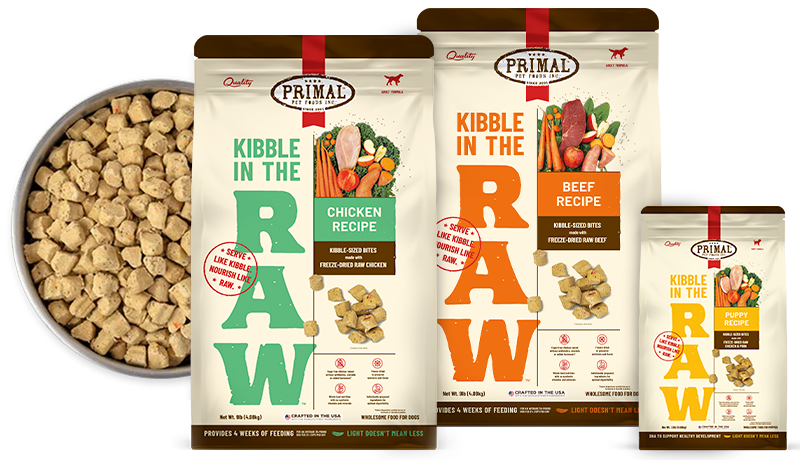
Kibble in the Raw
Keep the bag sealed and store in a cool, dry place separate from other foods. Kibble in the Raw does not need to be refrigerated. Seal bag completely after opening.
Toppers & Hydrators
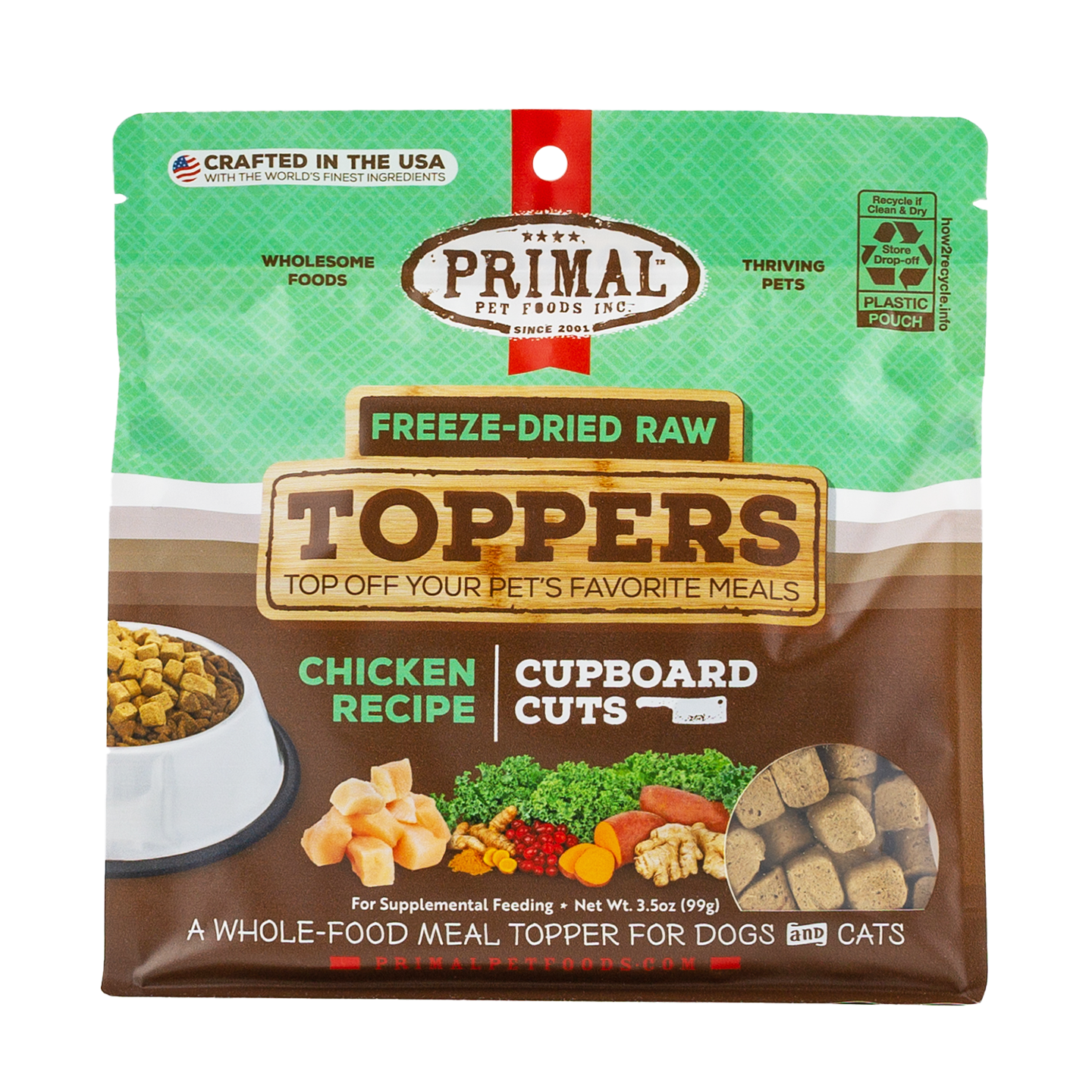
Freeze-Dried Raw Toppers
Store in a cool, dry place. Cupboard Cuts Freeze-Dried Raw Toppers do not need to be refrigerated. Seal bag completely after opening.
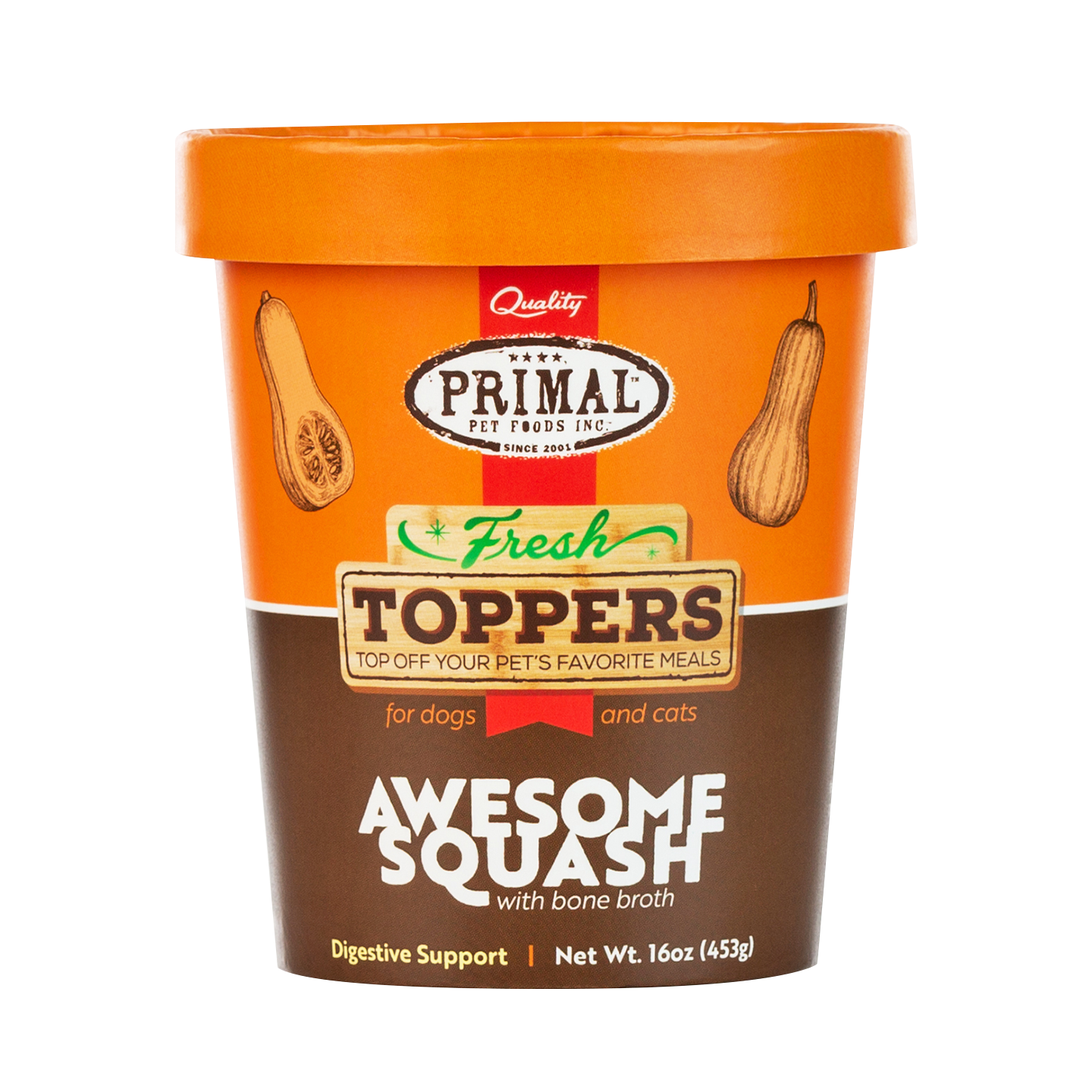
Fresh Toppers
Keep frozen until ready to use. Allow 36 to 48 hours to defrost in the refrigerator. Store defrosted Fresh Toppers in the refrigerator and use within 7 days. Thawed Fresh Toppers can be portioned into ice cube trays and refrozen for later use.
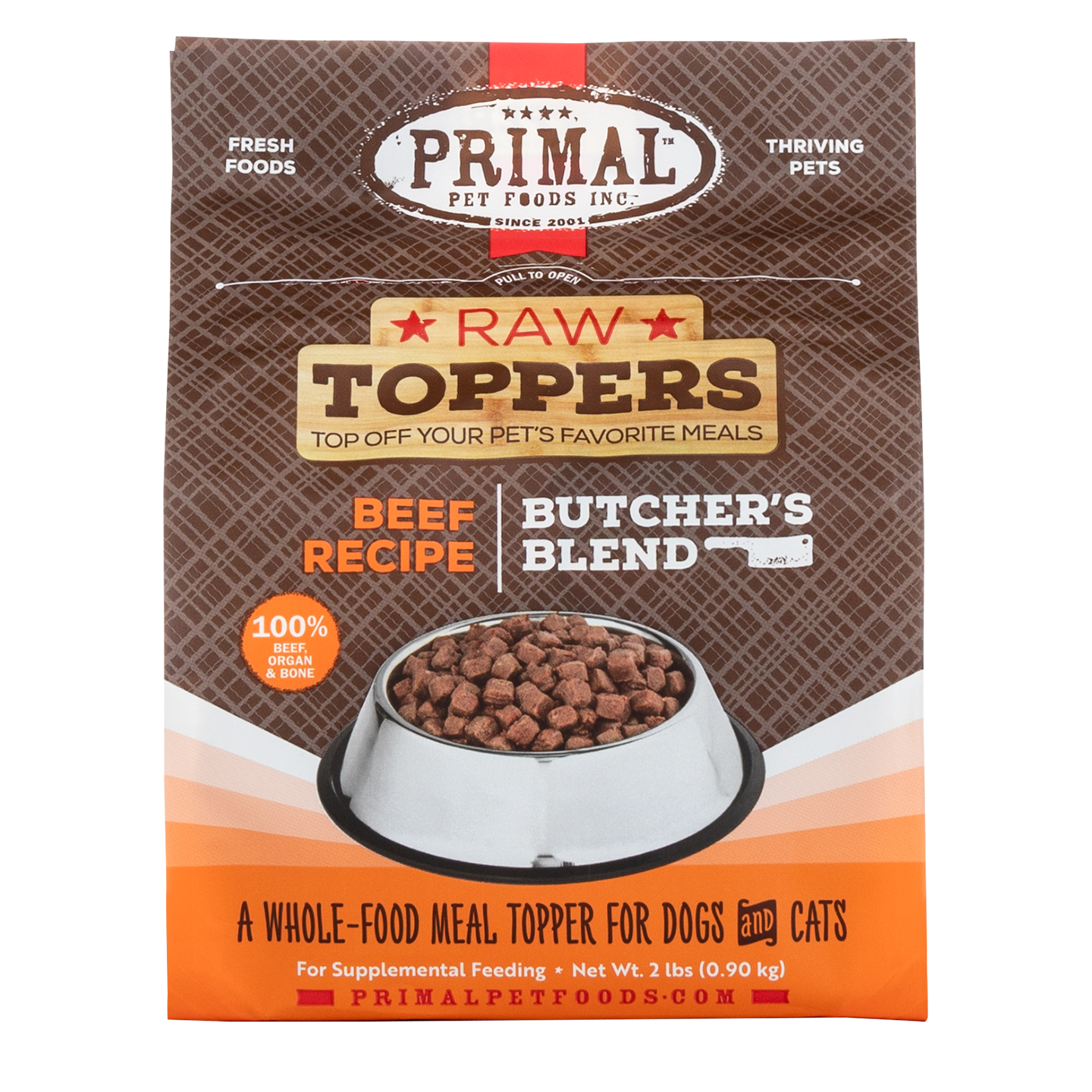
Frozen Raw Toppers
Keep frozen until ready to serve. Butcher’s Blend and Market Mix Raw Toppers will maintain optimum freshness for up to 5 days refrigerated.
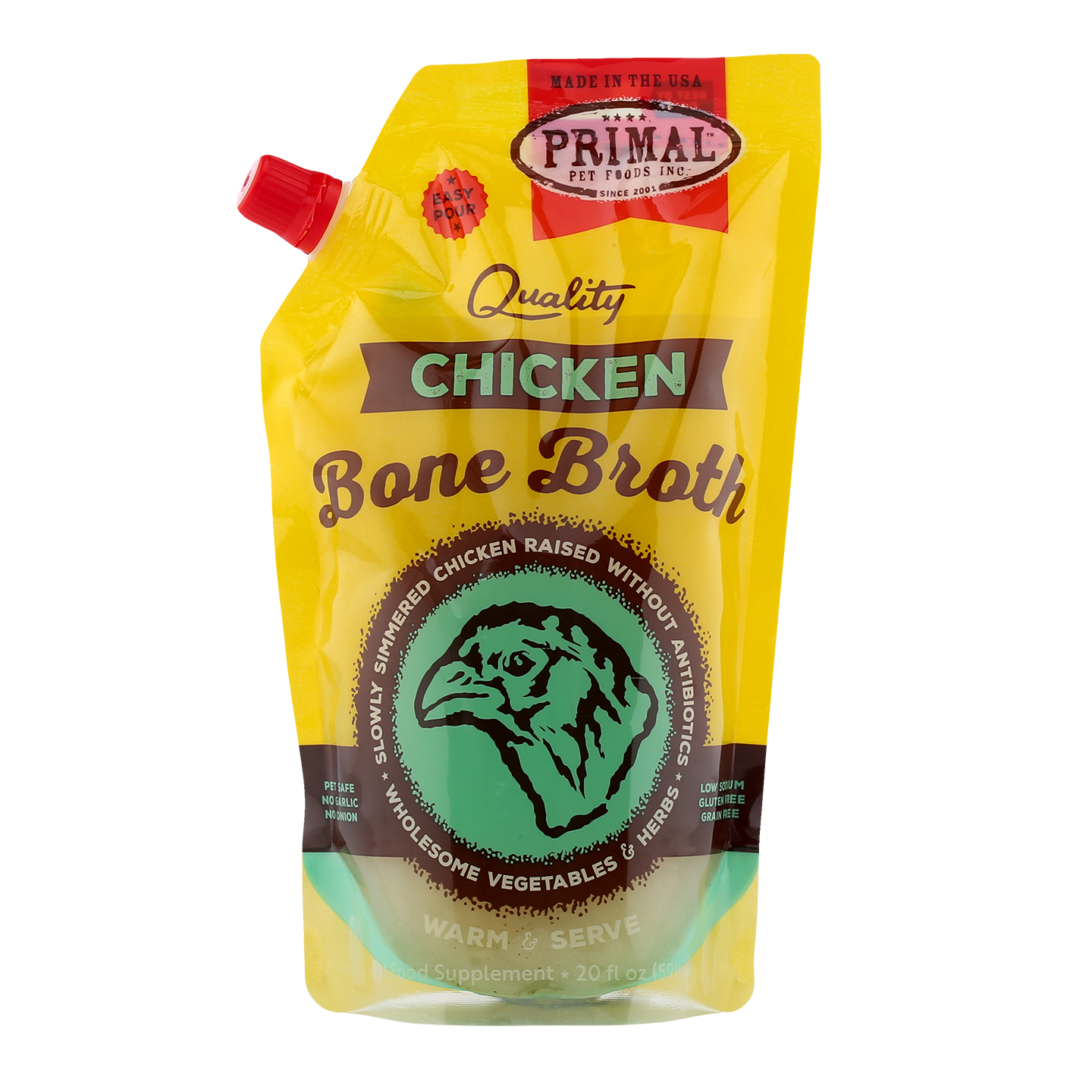
Bone Broth
Keep frozen until ready to use. Allow 36 hours to defrost in the refrigerator. Thawed Bone Broth can be portioned into ice cube trays and refrozen for later use. Best if used within 7 days of thawing.
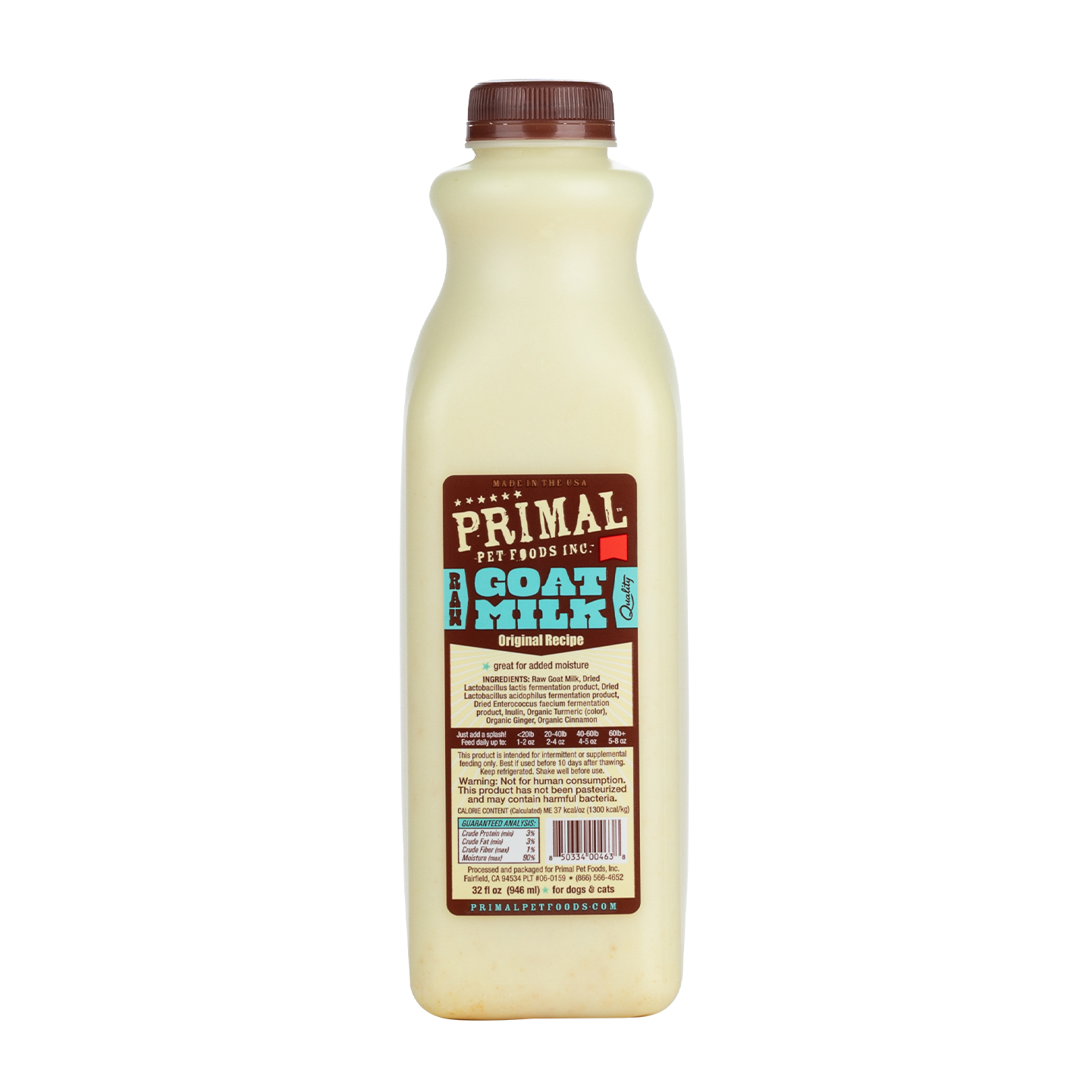
Raw Goat Milk
Store in the freezer. Defrost bottle in refrigerator 24 hours prior to use. Raw Goat Milk lasts 10 days thawed and 1 year frozen.
Raw Recreational Bones
Raw Recreational Bones
Feed right from the freezer. We recommend serving outdoors or on a patio. If you serve marrow bones indoors, place them on a mat, towel, or other surface that can be machine-washed or easily disinfected. Always monitor your pet when feeding any chew.
Feeding and Preparation Best Practices
To simplify feeding, try staging a few containers each with a day’s worth of food in your freezer. When you use the last of the thawed food from your fridge, move one of the portioned containers from your freezer to your fridge to thaw for your pet’s next meal.
See our Feeding Calculator for personalized recommendations on how much to feed your pet. Factors such as your pet’s amount of activity, age, health, metabolism, and breed play a part in how much they eat. Talk to your veterinarian for more specific recommendations. Divide the total feeding recommendation by the number of meals your pet eats per day.
Safe Handling
Always serve pet food products in a stainless steel bowl. Other materials, such as plastic and porcelain, are porous. This means they can trap germs over time.
Wash all work surfaces, utensils, hands, and food bowls with hot, soapy water after handling raw meats and poultry. Keep raw meat and poultry away from children and separate from other foods.
-

Starting a Raw Diet for Puppies & Kittens
See when and how to start raw food for young pets.
-

Transitioning Your Dog or Cat to Raw Food
Learn how to slowly transition your pet to Primal from another food.

